If your landlord has told you that you need to leave, you may be wondering how much notice they legally have to give you.
There is no single notice period that applies to every tenant in England. The amount of notice depends on the legal reason, or ground for possession, that the landlord is relying on.
Since 1 May 2026, the rules have changed significantly. For most private tenancies covered by the new rules, landlords cannot use a Section 21 no-fault eviction notice. They generally need to use a Section 8 notice and rely on a specific legal ground for possession.
Depending on the ground, the notice period can be two weeks, four weeks, two months or four months. For certain antisocial behaviour grounds, there is no minimum period before court proceedings can begin.
How Much Notice Must a Landlord Give a Tenant?
The answer depends on why the landlord wants possession.
For Section 8 notices served under the current rules, the main notice-period categories are:
| Reason for possession | Minimum notice period |
|---|---|
| Landlord wants to move into the property | 4 months |
| Landlord wants to sell the property | 4 months |
| Certain mortgage-related possession grounds | 4 months |
| Certain redevelopment grounds | 4 months |
| Some accommodation-related grounds | 2 months |
| Tenant has died in circumstances covered by the relevant ground | 2 months |
| Serious rent arrears | 4 weeks |
| Some other rent arrears | 4 weeks |
| Persistent late payment of rent | 4 weeks |
| Breach of tenancy agreement | 2 weeks |
| Certain damage-related grounds | 2 weeks |
| Certain antisocial behaviour grounds | No minimum notice before court proceedings |
These are the current notice-period categories for Section 8 grounds. The exact period depends on the ground or grounds stated in the notice.
A landlord cannot simply choose a eviction notice period because they want you to leave quickly.
If your landlord tells you that you have 7 days, 10 days or 24 hours to leave, you should check whether the notice actually complies with the legal requirements.
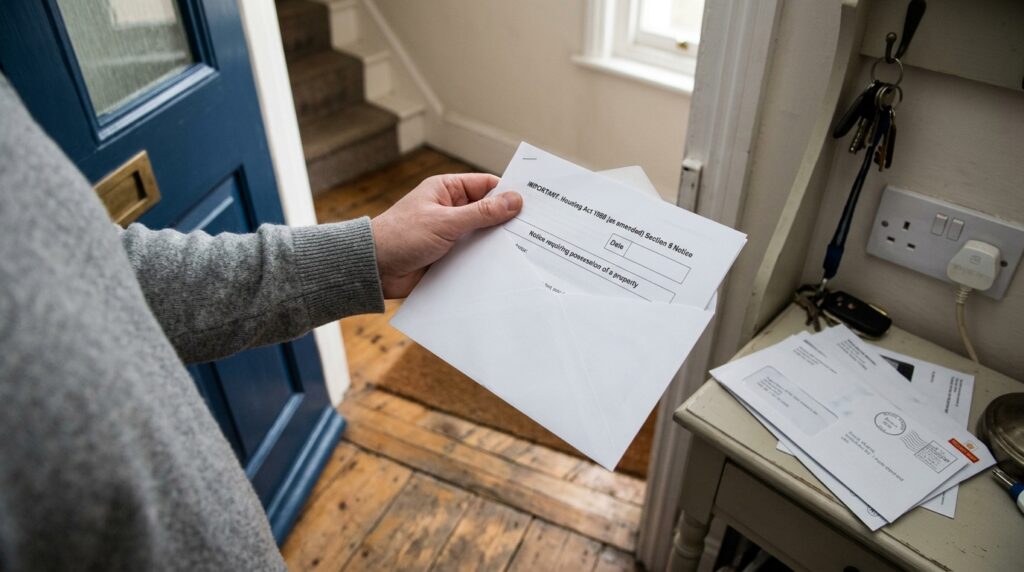
What Is the Legal Eviction Notice Period in England?
Since 1 May 2026, most private landlords seeking possession under the new rules must use a Section 8 notice.
If the landlord sent an eviction notice, then he must have a legal ground for possession and must give the correct amount of notice for that ground.
GOV.UK states that a Section 8 notice served after 1 May 2026 must generally use Form 3A, or a form substantially to the same effect. The landlord must also set out the relevant ground and the reasons why they believe it applies.
The notice period depends on the ground.
For example:
- 4 months for grounds including the landlord wanting to move in or sell.
- 2 months for certain other possession grounds.
- 4 weeks for certain rent arrears and persistent late-payment grounds.
- 2 weeks for certain tenancy-breach and other grounds.
- No minimum notice before proceedings for certain antisocial behaviour grounds.
This is why there is no single answer to the question, “What is the minimum eviction notice period in England?”
Can a Landlord Give You 2 Weeks’ Notice?
Yes, but only for certain legal grounds.
Two weeks is not a general notice period that a landlord can use whenever they want.
Under the current Section 8 rules, two weeks can apply to grounds including:
- breach of a tenancy term;
- deterioration of the property;
- damage to furniture;
- certain student accommodation circumstances;
- certain antisocial behaviour-related grounds; and
- other specific statutory grounds.
So if your landlord gives you two weeks’ notice, look at the ground stated on the notice rather than assuming that two weeks is automatically valid.
Can a Landlord Give You 7 Days’ Notice?
A landlord cannot simply decide that 7 days is the correct eviction notice period.
The current Section 8 framework contains specific statutory notice periods. For many grounds, these are two weeks, four weeks, two months or four months.
Seven days is therefore not a standard Section 8 notice period.
If you have received a notice giving you only seven days, check:
- What type of tenancy you have.
- Whether the notice is a Section 8 notice.
- Which possession ground is being relied upon.
- Whether the correct notice period has been given.
- Whether you have completed and served the notice correctly.
If the landlord has simply sent a message saying “You have 7 days to leave”, that is not automatically the same thing as a valid possession notice.
Can a Landlord Give You 24 Hours’ Notice?
For most private tenants, a landlord cannot simply demand that you leave your home within 24 hours and use that demand to bypass the legal possession process.
A text message, WhatsApp message, phone call or verbal demand does not automatically give a landlord the right to take possession.
There are special rules for certain serious antisocial behaviour grounds, where court proceedings can begin without the usual minimum notice period. However, that does not mean a landlord can simply change the locks or physically remove the tenant themselves.
If your landlord has told you to leave within 24 hours, do not assume that the demand is legally effective.
What Makes an Eviction Notice Valid?
Declaring a document an “eviction notice” does not by itself validate it.
A Section 8 notice must meet the relevant legal requirements.
1. A legal ground must exist for possession.
The landlord must rely on a recognised statutory ground.
The notice should identify the ground, together with the substance of the reasons why the landlord believes that ground applies.
2. We must give the correct notice period.
The landlord must give the minimum period required for the particular ground.
For example, a landlord relying on grounds 1 or 1A generally needs to give four months’ notice, whereas certain rent arrears grounds require four weeks.
3. Ensure you use the correct notice.
GOV.UK states that landlords should use Form 3A, or a form substantially to the same effect, for Section 8 notices under the current rules.
4. The notice must contain the required information
The landlord needs to provide the required information about the possession ground and why it applies.
An incomplete or inaccurate notice can cause problems with a subsequent possession claim. GOV.UK warns that an incorrect or incomplete notice can cause the court to dismiss or delay a claim.
5. The notice must be served correctly
How and when the notice was given can also matter.
Keep the original notice, envelope and any messages or emails relating to it.
What Happens When the Notice Period Ends?
This is one of the most important things to understand:
The expiry of an eviction notice does not normally mean your landlord can simply remove you that day.
If you do not leave by the date stated in the notice, the landlord generally needs to apply to the court for a possession order.
The process is broadly:
Section 8 notice → notice period → court possession claim → court decision → possession order → enforcement if necessary
The court considers the possession claim and the evidence provided.
If a possession order is made and you still do not leave, enforcement may ultimately involve court bailiffs.
So if your landlord says:
“Your notice expires tomorrow, so I can change the locks.”
Do not assume that is lawful.
The notice and the court process are separate stages.
Can a Landlord Evict You Without a Court Order?
For most private tenants who do not agree to leave, a landlord cannot simply take possession by force or bypass the legal process.
GOV.UK’s current guidance explains that if the tenant does not leave by the date in the notice, the landlord must apply to court for a possession order.
This is particularly important if your landlord threatens to:
- change the locks;
- remove your belongings;
- physically force you out;
- prevent you from entering your home; or
- otherwise take possession without following the court process.
If this is happening, you should seek appropriate housing or legal advice urgently.
Related guide: [Can a Landlord Evict Without a Court Order?]
What Should You Do If You Receive an Eviction Notice?
If you receive an eviction notice, do not immediately assume that you have to leave on the date written on it.
Instead:
1. Keep the entire notice
Take photographs or make a copy.
Keep:
- the notice;
- envelope;
- tenancy agreement;
- emails;
- text messages;
- WhatsApp messages;
- letters; and
- other communications from your landlord.
2. Check when it was served
The date you received the notice can be important when calculating whether the required notice period has been given.
3. Identify the possession ground
Look for the ground number and the explanation of why the landlord says it applies.
4. Check the notice period
Compare the period given with the legal requirement for that particular ground.
5. Do not ignore the situation
Even if you believe the notice is invalid, keep all correspondence and seek appropriate advice.
6. Get help if you are at risk of losing your home
If the situation could result in homelessness, contact your local council’s housing or homelessness service and seek appropriate legal or housing advice.
Check Your Eviction Notice
Not sure whether the notice you’ve received follows the current rules?
Use our Eviction Notice Validity Checker
Our checker takes you through key questions about your eviction situation and helps you identify issues you may need to investigate.
Eviction Notice Validity Checker
Check your notice against the Renters’ Rights Act rules in 60 seconds. This is a preliminary check, not legal advice.
⚠ Preliminary Assessment
This is a preliminary, automated check based on what you told us — not legal advice. Notice validity can turn on exact dates and paperwork, so have it reviewed before you rely on it.
Get Your Full Action Plan
Your assessment is just the start. Members get letter templates, evidence checklists, and step-by-step guidance for exactly what you're facing.
The checker provides general information and does not replace advice about your individual circumstances.
What If Your Landlord Gave You Only 2 Days?
If your landlord has told you to leave in two days, particularly through a text message, WhatsApp or verbal demand, do not automatically assume that you have been legally evicted.
The current possession process has specific requirements, including the applicable possession ground, notice period and formal notice requirements.
We have a separate guide specifically covering this situation:
Landlord Sent Me a Two-Day Eviction Notice by Text?
That guide explains what a two-day demand means, what to do next and what to do if your landlord attempts to remove you.
What If My Landlord Wants to Sell the Property?
The current rules allow landlords to seek possession where they intend to sell the property, but specific requirements apply.
Under Ground 1A, the landlord intends to sell the property. The minimum notice period is generally four months. The ground also cannot normally be used until the tenancy has been in place for at least 12 months.
This means a landlord cannot simply say:
“I’m selling the property, so you have one month to leave.”
The legal requirements still need to be followed.
What If My Landlord Wants to Move Back In?
There is also a possession ground where the landlord or a close family member intends to occupy the property.
Under the current rules, Ground 1 generally requires four months’ notice and cannot normally be used to require possession until the tenancy has been in place for at least 12 months.
Again, the landlord must satisfy the requirements for the particular ground.
Does Section 21 Still Apply?
For possession notices served under the new rules from 1 May 2026, landlords cannot use Section 21 to seek possession.
GOV.UK confirms that Section 21 cannot be used under the new post-1 May 2026 possession process. Landlords generally need to rely on a Section 8 ground instead.
This is an important change because much of the information still appearing online about “two months’ Section 21 notice” relates to the old system.
If you are researching eviction rules today, make sure the information you rely on reflects the post-1 May 2026 rules.
Frequently Asked Questions
How much notice must a landlord give a tenant in England?
There is no single notice period. Under the current Section 8 rules, the required period depends on the possession ground and can be two weeks, four weeks, two months or four months. Certain antisocial behaviour grounds have special rules allowing court proceedings to begin immediately.
Can a landlord give 7 days’ notice?
A landlord cannot simply choose seven days as the notice period. The required period depends on the statutory ground being used. The current Section 8 framework generally uses two weeks, four weeks, two months or four months for the relevant grounds.
Can my landlord give me 24 hours to leave?
A landlord generally cannot use a 24-hour demand to bypass the legal possession process. Certain antisocial behaviour grounds have special rules, but these do not give a landlord a general right to physically remove a tenant without following the applicable legal process.
What is the minimum eviction notice period in England?
There is no universal minimum. Depending on the Section 8 ground, the notice period can be two weeks, four weeks, two months or four months. Certain antisocial behaviour grounds have no minimum period before court proceedings can begin.
Can my landlord evict me when my notice expires?
Not normally by simply removing you themselves. If you do not leave after a valid notice expires, the landlord generally needs to apply to court for a possession order.
Is Section 21 still used in England?
For notices served under the current rules from 1 May 2026, no. Section 21 cannot be used to seek possession under the new framework. Landlords generally need to rely on a Section 8 possession ground.
Get Help With Your Eviction Situation
If you have received an eviction notice, do not rely solely on the number of days written on a letter, text message or email.
The important questions are:
- What possession ground is being used?
- Was the correct notice given?
- Was the correct notice period provided?
- Was the notice completed correctly?
- Was it served correctly?
- What happens if you do not leave?
If you are unsure whether your landlord has followed the correct process, use our Eviction Notice Validity Checker and consider getting appropriate housing or legal advice.
If your landlord is threatening to change the locks, remove you immediately or otherwise force you out, seek urgent help.
Authoritative information
For current information about eviction and possession in England, see the latest guidance from GOV.UK, Shelter England and the legislation published on legislation.gov.uk.
Last reviewed: September 2026
This article provides general information about eviction and notice requirements in England. It is not a substitute for advice about your individual circumstances. Housing law and official guidance can change, so check the latest official information or obtain appropriate legal advice for your situation.