The Renters’ Rights Act 2025 gave private tenants in England a genuine statutory right to request a pet for the first time, not just a change in guidance or a model clause, but an actual amendment to the Housing Act 1988. Here’s exactly what the legislation does, section by section or see our full breakdown of what’s changed under the Renters’ Rights Act 2025 for how this fits alongside the other reforms.”
Where the Right Comes From
Section 11 of the Renters’ Rights Act 2025 inserts two new sections into the Housing Act 1988: section 16A (the right to request) and section 16B (supporting provisions, including what counts as reasonable). This came into force on 1 May 2026, alongside the wider reforms abolishing Section 21.
The right applies to assured tenancies in the private rented sector. Social housing tenancies are specifically excluded, since these typically already operate under their own pet policies.
What Section 16A Actually Requires
Under section 16A:
- A tenant may keep a pet at the property if they ask in accordance with the section, and the landlord consents
- Consent must not be unreasonably refused
- The landlord must give or refuse consent in writing on or before the 28th day after the date of the request
Section 16A also makes clear that a “pet” for these purposes means an animal the tenant permits to live at the property, whether or not the tenant actually owns it. It doesn’t extend to pets that merely visit rather than live there; a landlord can still set separate terms about visiting animals if they choose.
The Timeline in Full
The 28-day response window isn’t always the whole story. If the landlord reasonably requests further information about the pet on or before day 28 — details like breed, size, training, or insurance arrangements — the deadline extends. Once the landlord has that information, they get a further period to make a final decision (commonly cited as 7 days from receiving the additional detail), rather than the clock simply restarting.
Where more than one of these extension provisions could apply, the landlord can delay until the latest date any of them would allow — but not beyond that.
What Counts as “Reasonable” Under the Act
The Act itself specifies certain circumstances where refusal is automatically treated as reasonable, most notably where keeping the pet would put the landlord in breach of an agreement with a superior landlord, or where the landlord has sought that superior landlord’s consent and been refused.
Outside those specific scenarios, “reasonable” isn’t given a fixed checklist in the Act itself, it’s assessed on the individual circumstances of the request, the property, and the pet. Legal commentary since the Act’s commencement has consistently pointed to factors like property size and type, the specific animal’s size and behaviour, and the potential impact on neighbours or shared spaces, as the kind of considerations that would genuinely support a reasonable refusal, as opposed to a generic policy applied without any property-specific reasoning.
Pet Damage Insurance
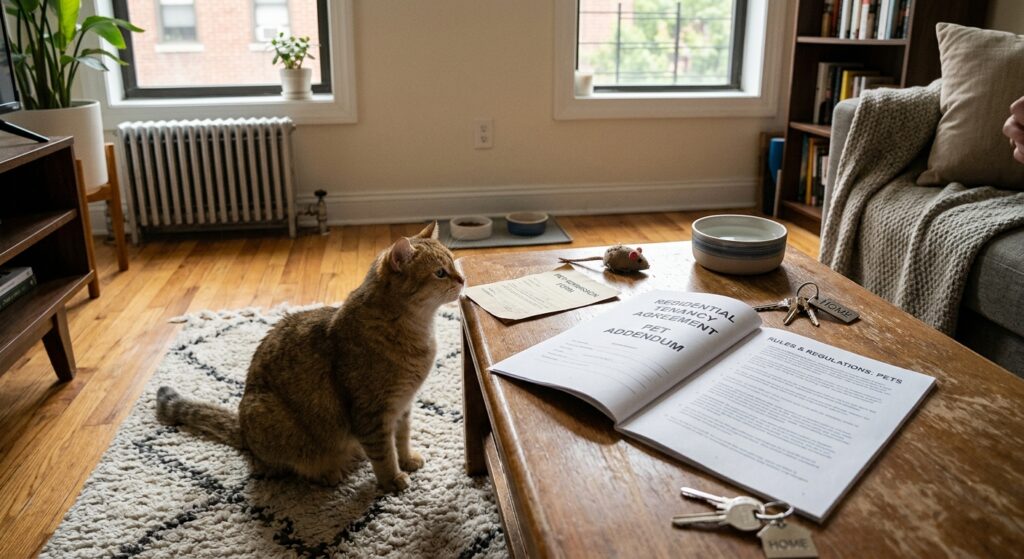
The reform specifically addressed the money question that immediately follows any “tenants can request pets” policy: what can a landlord charge for the added risk? The Act allows a landlord to require pet damage insurance as a condition of granting consent, either the tenant takes out their own policy, or in some arrangements the landlord arranges cover and passes on the cost. This sits as a specific carve-out alongside the Tenant Fees Act 2019’s general ban on additional charges, rather than replacing that ban outright, a landlord still can’t invent a separate “pet fee” or inflate the deposit specifically because of a pet.
What Happens If a Tenant Keeps a Pet Without Asking
The right to request doesn’t mean a tenant can simply acquire a pet and inform the landlord afterwards. Keeping a pet without going through the section 16A process remains a breach of tenancy, and, depending on the tenancy agreement’s terms, could potentially form the basis of a Section 8 notice on the ground covering breach of tenancy obligations. Given the direction of the reform, though, a court is likely to look closely at whether a landlord would genuinely have refused a proper request before treating an unauthorised pet as a serious breach, but it’s a risk not worth taking when the process itself is straightforward.
Where Disputes Go
If a tenant believes a refusal wasn’t genuinely reasonable, the dispute route is the First-tier Tribunal, which can examine whether the landlord followed the process correctly and whether the stated grounds for refusal actually hold up. This sits alongside, not instead of, a tenant’s separate rights under the Equality Act 2010 for assistance animals, which follow their own distinct legal route through discrimination law rather than the pet-request process.
Frequently Asked Questions
Does this apply to tenancies that started before 1 May 2026? Yes. The right to request a pet applies to assured tenancies generally, not just ones created after the Act’s commencement, existing tenants can make a request under the new rules.
Can a landlord just keep a blanket “no pets” clause in the tenancy agreement? A clause like this no longer gives a landlord an automatic right to refuse. Even with such a clause present, any refusal of a specific request still has to meet the “reasonable” standard set by the Act.
What if my landlord ignores my request completely? If there’s no response within the statutory deadline (accounting for any valid extension for further information), this is generally treated as consent having been given.
Is there a standard form for requesting a pet? The Act doesn’t mandate a specific form, only that the request is in writing and includes a description of the pet, see our practical guide on how to ask a landlord for permission to keep a pet for a usable template.
This article covers the law in England as of September 2026. It’s general information, not legal advice for your specific situation. The full text of section 11 of the Renters’ Rights Act 2025 is available on legislation.gov.uk. Last reviewed: September 2026.
What to Read Next
- Can a Landlord Refuse Pets in the UK? — the main practical guide
- Landlord Refusing Pets Full Guidance — Detail guide on what to do
- How to Ask a Landlord for Permission to Keep a Pet — a template request and next steps