If you’re trying to work out whether your landlord should have used a Section 8 or a Section 21 notice, here’s the short answer: as of 1 May 2026, that question no longer applies. Section 21 has been abolished. Section 8 is now the only route a landlord has to end a tenancy in England.
This guide covers what each notice used to do, why the comparison mattered for so long, and, more usefully, what the law actually requires now. Join Renters Rights Act Services now if you are facing this issue, we’ll help you by providing practical resources and step-by-step guide.
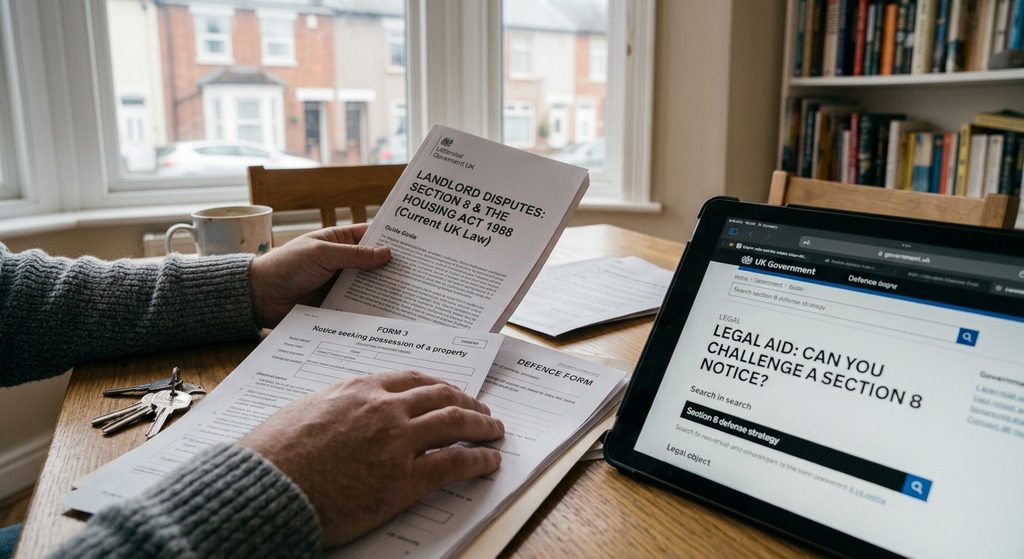
The Quick Answer: Section 21 No Longer Exists
Section 21 of the Housing Act 1988 was permanently abolished on 1 May 2026 under the Renters’ Rights Act 2025. Any Section 21 notice issued after that date has no legal effect at all — it’s not just outdated, it’s void. Landlords who served a valid Section 21 notice before 1 May 2026 had a short window to apply to court on the strength of it, but that window closed on 31 July 2026. If you’ve received a notice claiming to be a Section 21 after that cut-off, it isn’t valid, full stop.
Section 8 is now the only mechanism a private landlord can use to seek possession of a rented home in England.
What Section 21 Used to Be (For Context)
For nearly 40 years, Section 21 was the “no-fault” eviction route. A landlord could end a tenancy after any fixed term expired, giving at least two months’ notice, without stating a reason. The tenant couldn’t contest it on the merits, only on technical grounds, like the landlord failing to protect the deposit or missing a required certificate.
That’s what made it controversial. A tenant could be given notice for raising a complaint about repairs, asking for a rent review, or simply because the landlord wanted to relet at a higher rent, and there was no way to challenge the underlying reason, because there wasn’t one to challenge.
What Section 8 Requires
Section 8 works completely differently. The landlord must:
- State a specific legal ground for possession, drawn from Schedule 2 of the Housing Act 1988 (as amended by the Renters’ Rights Act 2025)
- Provide evidence the ground applies, this isn’t just a form, it has to actually hold up
- Give the correct notice period for that specific ground, which varies, from as little as two weeks for serious anti-social behaviour, up to two or four months for grounds like the landlord wanting to sell or move in
Grounds fall into two categories:
- Mandatory grounds — if the landlord proves the ground applies (e.g. serious rent arrears), the court must grant possession
- Discretionary grounds — the court decides whether it’s reasonable to grant possession even if the ground is technically met
Since the reform, there are also new financial penalties for landlords who misuse a ground, for example, claiming they need the property back to sell it and then relisting it for rent shortly after. That’s a real check that didn’t exist under the old Section 21 system.
Why This Comparison Still Gets Searched
If Section 21 is gone, why is “Section 8 vs Section 21” still such a common search? A few reasons:
- Notices served before 1 May 2026 are still working through the courts in some cases, so older tenancies may genuinely have been served either type
- Outdated advice is still online. A lot of landlord and letting-agent content published before the reform hasn’t been updated, and still describes Section 21 as a live option
- People confuse the numbering — “Section 8” and “Section 21” both sound like arbitrary legal labels, so it’s natural to want the difference explained even once one side of the comparison no longer exists
If you’re checking a notice you’ve just received, the only question that matters now is whether it’s a valid Section 8, not which of the two it is.
How to Tell If a Section 8 Notice Is Valid
A valid Section 8 notice must specifically:
- Be in writing, using the prescribed form
- State which ground (or grounds) the landlord is relying on
- Give the correct minimum notice period for that ground
- Actually be accurate, a notice citing a ground that doesn’t apply to your situation isn’t valid just because it uses the right form
If any of this is missing or wrong, the notice may not hold up in court — but that’s a legal judgment worth getting checked rather than assuming yourself. For a fuller breakdown of what a lawful notice period looks like across different grounds, see our guide on how much notice a landlord must give.
What This Means If You’ve Received a Notice
However clear-cut the ground looks on paper, a Section 8 notice is not itself an eviction. Your landlord still has to apply to court, there’s a hearing, and only a court order followed by bailiffs can actually remove you. That process takes weeks to months, not days.
If you’re at that stage now, our guide on what to do after receiving an eviction notice walks through the practical next steps.
Frequently Asked Questions
Can a landlord still use Section 21 in 2026? No. Section 21 was permanently abolished on 1 May 2026. Any Section 21 notice served after that date is void, and the transition window to act on notices served before it closed on 31 July 2026.
What replaced Section 21? Section 8 is now the only route to possession for private landlords in England. It requires the landlord to cite a specific legal ground and give evidence to support it, unlike Section 21, which required no reason.
Is a Section 8 notice harder for a landlord to use than Section 21 was? In practice, yes. The landlord has to prove a specific ground applies, notice periods for many grounds have been extended, and there are now financial penalties for misusing a ground.
Does this apply to social housing too? The Section 21 abolition applies first to the private rented sector from 1 May 2026. Social sector changes are being introduced in a later phase — if you rent from a council or housing association, check the specific timeline for your tenancy type.
This article covers the law in England as of September 2026, following the Renters’ Rights Act 2025 reforms. It’s general information, not legal advice for your specific situation — if you’re facing eviction, Shelter’s Section 8 notice guide and free advice from Civil Legal Advice can help you check where you stand. Last reviewed: September 2026.
What to Read Next
- How Much Notice Must a Landlord Give? — exact notice periods by ground
- What to Do After Receiving an Eviction Notice — your next practical steps
- Your Landlord Has Sent an Eviction Notice: Full Guide — the complete cluster