Since 1 May 2026, you have a statutory right to ask your landlord for permission to keep a pet, but making a strong, well-documented request still makes a real difference to your chances, and to how quickly it gets resolved. Here’s how to do it properly, plus a template you can adapt.
Before You Ask: Get the Basics Right
A vague or informal request is easy for a landlord to overlook or delay. Before you send anything:
- Put it in writing. A verbal conversation doesn’t start the legal 28-day clock, a written request does.
- Describe the specific animal. Breed, size, age, and temperament if relevant (a calm, older cat is a different proposition to a young, high-energy dog, and it’s worth saying so).
- Anticipate likely questions. Training, whether the pet will be left alone during the day, any history of noise complaints or damage from previous tenancies, and whether you’re willing to take out pet damage insurance.
- Check your tenancy agreement first, even though a “no pets” clause no longer gives your landlord an automatic right to refuse, it helps to know exactly what you’re asking to vary.
What to Include in Your Request
A strong written request typically covers:
- A clear statement that you’re formally requesting permission to keep a pet, referencing your right to do so under the Renters’ Rights Act 2025
- A full description of the animal — species, breed, age, size, and any relevant temperament or training details
- How you’ll manage practical concerns — arrangements for exercise, noise, mess, and time spent alone
- An offer of pet damage insurance, if you’re willing to take this on — this can genuinely help move a borderline request toward a “yes,” since it directly addresses the financial risk a landlord is weighing
- A request for a written response, noting the 28-day statutory deadline
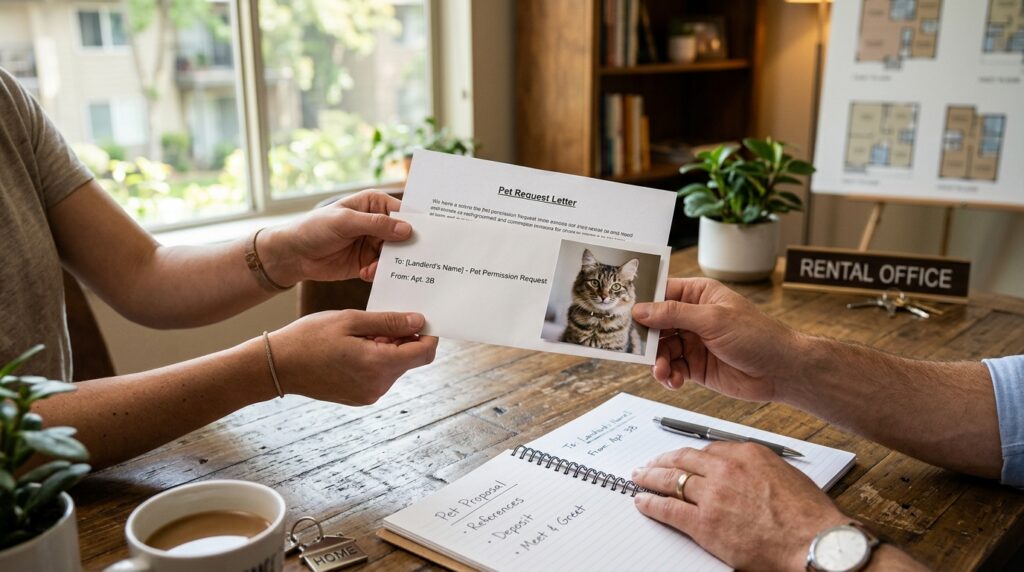
Template Request Letter
Get instant access to our complete library of landlord request letters, including pet requests, repair notices, and rent challenge templates, plus expert guidance to protect your rights. join now
After You’ve Sent It
- Keep a copy and proof of sending — email is usually easiest for this, since it gives you a clear date.
- Track the 28-day deadline. If your landlord asks for more information within that window, note the date you respond, since their further decision window typically runs from there.
- Follow up in writing if the deadline passes with no response — while non-response is generally treated as consent, a written follow-up creates a clear record either way.
- If refused, ask for the specific reasons in writing, if they weren’t already given. A landlord is expected to give genuine, property-specific reasons, not just restate a general policy.
If Your Request Is Refused
Read the stated reasons carefully. If they genuinely relate to the specific property or animal, for example, a head-lease restriction the landlord can’t get around, there may not be much more to do beyond looking for an alternative. But if the refusal feels generic, unexplained, or just repeats an old “no pets” clause without engagement with your specific request, you may have grounds to challenge it. See our guide on can a landlord refuse pets in the UK for what counts as a genuinely reasonable refusal, and where to take a dispute if you don’t think it meets that standard.
A Note on Assistance Animals
If you rely on an assistance dog because of a disability, this isn’t the process you need, assistance dogs are protected separately under the Equality Act 2010, and a landlord generally can’t rely on a “no pets” clause to exclude one at all. Frame a request for an assistance animal around reasonable adjustments under disability law, not the ordinary pet-request process described here.
Frequently Asked Questions
Do I have to offer pet insurance to get approval? No, but it can strengthen a borderline request, since it directly addresses the landlord’s main financial concern. A landlord can require it as a condition of consent, so it’s often worth proposing upfront rather than waiting to be asked.
Can I make the request before I’ve actually got the pet? Yes — in fact, this is generally the better approach, since it avoids the tenancy breach that comes with keeping a pet before permission is granted.
What if my landlord asks for a pet CV or references from a previous landlord? This isn’t a legal requirement, but providing one voluntarily, including any prior good conduct with pets, can help make a stronger case, particularly for a landlord who’s cautious rather than outright opposed.
How long do I have to wait before assuming permission is granted? 28 days from your written request, unless your landlord has validly requested further information within that window, in which case a further response period applies from when you provide it.
This article covers the law in England as of September 2026, following the Renters’ Rights Act 2025. It’s general information, not legal advice for your specific situation. Last reviewed: September 2026.
What to Read Next
- Landlord Refusing Pets Full Guidance — Detail guide on what to do
- Can a Landlord Refuse Pets in the UK? — the main practical guide, including what counts as reasonable
- Renters’ Rights Act Pet Rules Explained — the legislation in full detail