If your landlord wants to take money from your tenancy deposit for cleaning, damage, unpaid rent or another reason, you do not necessarily have to accept the deduction.
A landlord can make reasonable deductions where there is a genuine loss, but you can question deductions that appear excessive, unsupported or related to normal wear and tear. The important thing is to understand why the money is being withheld and whether the landlord has evidence to support the amount claimed.
If you are unsure what to say to your landlord or how to challenge the deduction, Renters Rights Act Services members can access practical deposit support, including deposit letters and guidance tailored to their situation.
When can a landlord deduct money from your deposit?
A landlord may be able to claim money from your deposit for things such as:
- unpaid rent
- damage caused by the tenant
- cleaning where the property has been left in a substantially worse condition
- missing items
- other costs that represent a genuine loss connected with the tenancy
However, a landlord cannot simply decide to keep part or all of your deposit without a reasonable basis.
The circumstances matter, including the property’s condition when you moved in, its condition when you left, the age of damaged items and the evidence available.
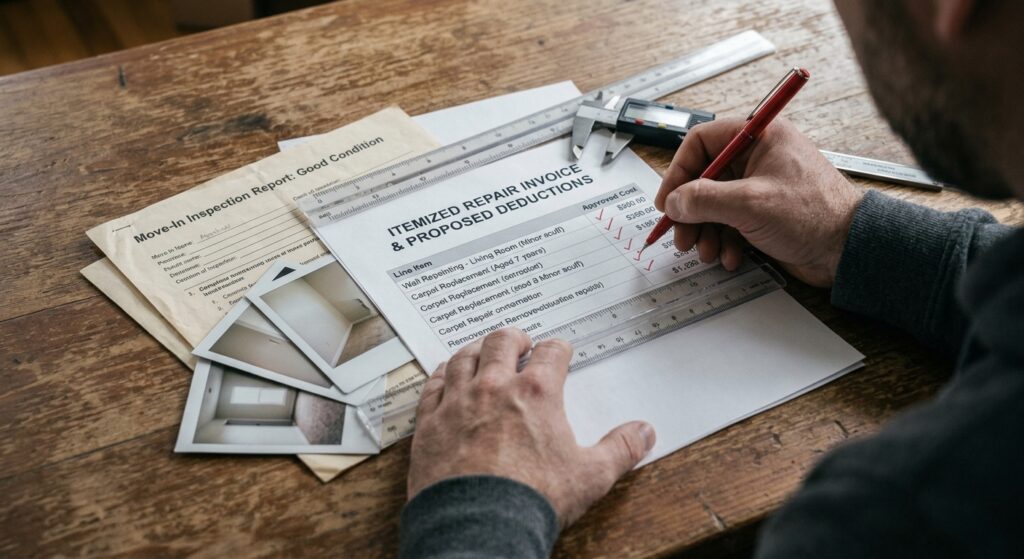
What makes a deposit deduction unfair?
A deduction may be worth questioning if:
The damage was already there
If the check-in inventory or photographs show that the damage existed before your tenancy, you should not automatically be responsible for it.
It is normal wear and tear
Properties and their contents naturally deteriorate through ordinary use.
For example, an older carpet becoming worn over several years is different from a tenant causing significant damage to it.
The amount seems excessive
A landlord should be able to explain why the amount being claimed is reasonable.
For example, replacing an entire item may not always be justified where a repair would have been sufficient.
There is little or no evidence
Ask what evidence supports the deduction.
This could include photographs, inventories, inspection reports, invoices, receipts or other relevant records.
You have already paid for the repair
If you arranged and paid for a repair during the tenancy, keep the receipt and correspondence. This may be important if the landlord later tries to claim the same cost from your deposit.
Can a landlord charge for normal wear and tear?
Generally, normal wear and tear should not be treated as tenant damage.
Normal wear and tear can include ordinary deterioration caused by reasonable use over time.
Whether something is normal wear and tear can depend on factors such as:
- how long you lived in the property
- the age of the item
- its condition when you moved in
- how heavily we used it
- what the inventory recorded
- the condition when you moved out
This is why comparing the check-in condition with the check-out condition is so important.
What should you check before accepting a deduction?
Before agreeing to a deduction, gather the documents and information you have.
Check your inventory
Look at the original check-in inventory.
Check whether you have already mentioned the item or problem you claim.
Compare photographs
If you took photographs or videos when you moved in and when you moved out, compare them carefully.
These can help establish whether the condition actually changed during your tenancy.
Check your tenancy agreement
Your tenancy agreement may contain information about your responsibilities, although a landlord cannot simply create charges that override applicable tenancy law.
Ask what the deduction is for
You should know exactly what your landlord is claiming.
If they say they are keeping £250 for ‘damage’, ask them what damage they mean and how they calculated the figure.
Look at the amount being claimed
We should not simply accept a deduction because the landlord has provided a number.
Assess whether the amount is proportionate to the issue you are claiming.
What if your landlord wants money for cleaning?
You can especially challenge cleaning deductions.
The relevant comparison is generally the condition of the property when you moved in against its condition when you left.
For example, if the property was already dusty or poorly cleaned at the beginning of the tenancy, the landlord may have difficulty justifying a claim that you must pay to bring it to a better standard than it was originally in.
Take photographs before leaving the property and keep any check-in or check-out documentation.
What if your landlord wants to replace something?
Make sure you claim the full cost of a new replacement.
The age and condition of an item can matter when assessing a landlord’s loss.
For example, if an old carpet is damaged, we should not treat the landlord as though they lost a brand-new carpet.
This is one reason why the inventory and evidence from the beginning of the tenancy can be so important.
What evidence should you keep?
If you think you can challenge a deduction, collect as much relevant evidence as possible.
Useful records can include:
- tenancy agreement
- check-in inventory
- check-out report
- photographs
- videos
- emails
- WhatsApp messages
- repair requests
- maintenance records
- receipts
- invoices
- rent payment records
- correspondence with your landlord or letting agent
Do not delete messages simply because the tenancy has ended.
A message from your landlord acknowledging an existing problem can sometimes be just as useful as a photograph.
What if you disagree with the deduction?
If you believe a deduction is unfair, do not simply ignore it.
Start by identifying exactly what your landlord is claiming and why you disagree.
You can ask the landlord or letting agent to explain the deduction and provide supporting evidence.
If you have protection for your deposit, you can also use the deposit protection scheme to settle any disagreements.
The three government-approved tenancy deposit protection schemes in England are:
The schemes provide dispute resolution services that meet their relevant requirements.
However, knowing that you can challenge a deduction is only part of the problem.
The wording of your response, the evidence you rely on and the documents you send can all matter.
Need help challenging your deposit deduction?
This is where Renters Rights Act Services membership can help.
If your landlord is withholding money from your deposit and you are unsure what to do next, members can access practical tenant support designed to help them deal with the situation.
Depending on your membership and situation, support can include:
- Deposit return letters
- Letters challenging unfair deductions
- Guidance on what evidence to gather
- Help understanding your landlord’s position
- Practical next-step guidance
- Situation Review support where available under your membership
Instead of trying to work out what to write to your landlord yourself, membership gives you access to practical resources designed around common tenant problems.
Don’t just accept an unexplained deposit deduction
If you believe your landlord is keeping money that should be returned to you, it is worth checking the deduction before accepting it.
Join Renters Rights Act Services and get access to practical deposit support, including letters and guidance to help you take the next step.
What if my landlord has not returned my deposit at all?
An unfair deduction is different from a landlord simply failing to return your deposit.
If your landlord has not returned the money after your tenancy has ended, you may need to take a different approach.
Read our main guide:
What to Do If Your Landlord Will Not Return Your Deposit
What if my deposit was never protected?
If your landlord was required to protect your deposit but failed to do so, this can raise separate legal issues.
Do not treat an unprotected deposit in exactly the same way as an ordinary disagreement over deductions.
If this applies to you, keep records showing when you paid the deposit, how much you paid and who received it.
You can then consider your available options and whether you need further help.
Deposit deduction checklist
Before accepting a deduction, check:
- Do I know exactly what the landlord is claiming?
- Was the problem present when I moved in?
- Do my photographs support my position?
- What does the inventory say?
- Is this normal wear and tear?
- Has the landlord explained the amount being claimed?
- Is there evidence supporting the deduction?
- Do I have messages or emails that are relevant?
- Is my deposit protected?
- Have I challenged the deduction in writing?
If you cannot confidently answer these questions, it may be worth getting practical guidance before accepting the deduction.
Frequently Asked Questions
Can I challenge a landlord’s deposit deduction?
Yes. If you believe a deduction is unfair, unsupported or excessive, you can question it. Start by identifying the deduction, checking your evidence and asking the landlord or agent to explain the amount being claimed.
Can a landlord keep my deposit for cleaning?
A landlord may seek a reasonable cleaning deduction where the property has been left in a significantly worse condition than at the start of the tenancy. However, you can question a deduction where the property was left in a comparable condition or the amount claimed appears unreasonable.
Can my landlord charge me for normal wear and tear?
Normal wear and tear is ordinary deterioration resulting from reasonable use over time. It should not simply be treated as tenant damage. The age, condition and expected lifespan of an item can be relevant.
What should I do if my landlord is making unfair deductions?
Collect your tenancy agreement, inventory, photographs, videos and relevant correspondence. Ask for details of the deduction and supporting evidence. If you need help preparing your response, Renters Rights Act Services membership provides practical deposit resources and support.
Can I get help writing a deposit deduction letter?
Yes. Renters Rights Act Services members can access practical deposit letters and guidance to help them communicate with their landlord about deposit issues.
Get Practical Help With Your Deposit
You should not have to guess what to say when your landlord is withholding money from your deposit.
If you believe the deduction is unfair, Renters Rights Act Services membership gives you access to practical tenant resources, including deposit letters and guidance to help you take the next step.
Join Renters Rights Act Services today and get practical support for your tenancy problem.
Legal information: This guide is for tenants in England and provides general information. It is not legal advice. Your rights and the appropriate next steps can depend on the type of tenancy, deposit arrangements and individual circumstances.
Last reviewed: September 2026