Your landlord is legally responsible for the structure and exterior of your home, and for keeping the supply of water, gas, electricity, sanitation, and heating in working order. This isn’t optional or something a tenancy agreement can remove, it’s a statutory duty that applies regardless of what your contract says.
Here’s exactly what that covers, what it doesn’t, and what to do if your landlord isn’t meeting it. For the fuller picture on what to do if repairs generally aren’t happening, see our main guide on landlords not doing repairs.
The Legal Basis: Section 11 of the Landlord and Tenant Act 1985
Under Section 11 of the Landlord and Tenant Act 1985, your landlord must keep in repair:
- The structure and exterior of the property, walls, roof, foundations, windows, drains, gutters, and external pipes
- Installations for water, gas, and electricity supply, and for sanitation, including basins, sinks, baths, and toilets
- Installations for space heating and heating water — boilers, radiators, and the heating system generally
This applies to almost all residential tenancies of less than seven years, including standard assured tenancies. Crucially, this duty is implied by law into every qualifying tenancy — a landlord cannot contract out of it, and any clause in your agreement trying to shift these responsibilities onto you is void.
What This Doesn’t Cover
Section 11 explicitly excludes appliances that merely use the water, gas, or electricity supply, ovens, washing machines, fridges, and similar items aren’t covered by this statutory duty, even though the supply to them is. This is a common source of confusion, and it’s specific enough that we’ve covered it in full separately: see does a landlord have to replace a washing machine?
Section 11 also generally doesn’t require your landlord to fix something caused by your own actions or misuse, though the line here isn’t always clear-cut, a landlord still has to investigate rather than simply assume “tenant lifestyle” caused a problem like damp or mould.
The Fitness for Human Habitation Standard
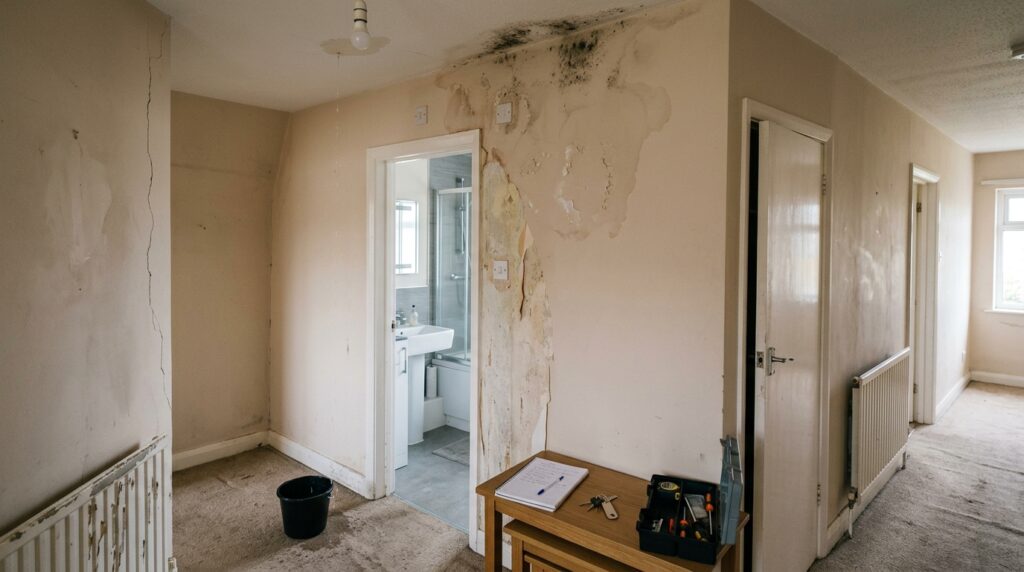
Alongside Section 11, the Homes (Fitness for Human Habitation) Act 2018 added a separate, directly enforceable standard: your home must be fit to live in throughout your tenancy, not just at the start. This covers things Section 11 doesn’t always reach cleanly, serious damp and mould, inadequate ventilation, and other conditions that make a property unsafe or unhealthy, even where they don’t neatly fit the “structure or installation” wording of Section 11.
Unlike some other housing standards, tenants can sue directly on this Act without waiting for council involvement.
How Quickly Must Repairs Be Done?
The law doesn’t set one fixed number of days for every repair, it requires repairs to be carried out within a “reasonable time,” and what’s reasonable depends heavily on severity. A complete loss of heating in winter is treated far more urgently than a slow-draining sink. As a general guide:
- Emergency repairs (no heating in winter, gas leaks, total loss of water or electricity, security risks like a broken external door), should be treated as urgent, ideally within 24 hours
- Urgent repairs (partial loss of heating, significant leaks, broken appliances that are the landlord’s responsibility), within a few days
- Routine repairs (minor cosmetic issues, non-urgent fixtures), within a few weeks is generally considered reasonable
Your landlord’s repair obligation technically only arises once they’re made aware of the problem, which is exactly why reporting repairs in writing, with a clear date, matters so much. If they’re dragging their feet after being told, see our guide on what to do if your landlord ignores repair requests.
Serious Hazards: Damp, Mould, and Unsafe Conditions
Damp, mould, and heating failures raise their own specific issues, including a health-and-safety enforcement route through your council that sits alongside your ordinary repair rights. We’ve covered this in depth separately: see damp, mould, heating, and unsafe housing: tenant rights.
What to Do If Repairs Aren’t Happening
- Report the issue in writing, even if you’ve already mentioned it verbally or by phone. This starts the clock on your landlord’s obligation and creates a record.
- Keep a dated log of every report, response, and non-response.
- Take photos or video showing the problem clearly, with a visible timestamp where possible.
- Chase again in writing if there’s no response within a reasonable time for the severity of the issue.
- Contact your council’s environmental health team if the problem is serious and your landlord isn’t acting, see our guide on ignored repair requests for the full escalation path.
Frequently Asked Questions
Can my landlord refuse to do repairs because I’m behind on rent? No. Repair obligations under Section 11 and the fitness-for-habitation standard exist independently of your rent account. Your landlord can pursue rent arrears through the proper legal channels, but that doesn’t excuse them from repair duties.
Do these rules apply to houses in multiple occupation (HMOs)? Yes, Section 11 applies to HMOs, and HMOs are also subject to additional licensing conditions and safety requirements on top of the standard repair duties.
What if the tenancy agreement says I’m responsible for a repair Section 11 covers? That clause is void. You cannot contract out of Section 11 obligations, regardless of what the tenancy agreement states.
Can I withhold rent until repairs are done? This is risky and can put you at real legal risk of arrears and possession action. Get advice from Shelter or Citizens Advice before considering it, there are safer routes, like the ones covered in this guide, to push for repairs.
This article covers the law in England as of September 2026. It’s general information, not legal advice for your specific situation. Shelter’s guide to repairs under Section 11 and GOV.UK’s tenant guide to the HHSRS can help you check your specific situation. Last reviewed: September 2026.
What to Read Next
- Your Landlord Is Not Doing Repairs: Full Guide — the complete cluster
- Does a Landlord Have to Replace a Washing Machine? — appliance responsibility explained
- What to Do If Your Landlord Ignores Repair Requests — escalation steps
- Damp, Mould, Heating, and Unsafe Housing: Tenant Rights — health and safety hazards