If you’ve reported a repair and your landlord doesn’t respond, you won’t have to wait indefinitely. There is a clear escalation path. It starts with a formal written request and involves your council’s environmental health team. If necessary, it can lead to compensation through the courts.
Here’s how to work through it properly, in the order that actually gets results. To understand what your landlord must legally fix, start with the broader picture. See our main guide on landlords not doing repairs.
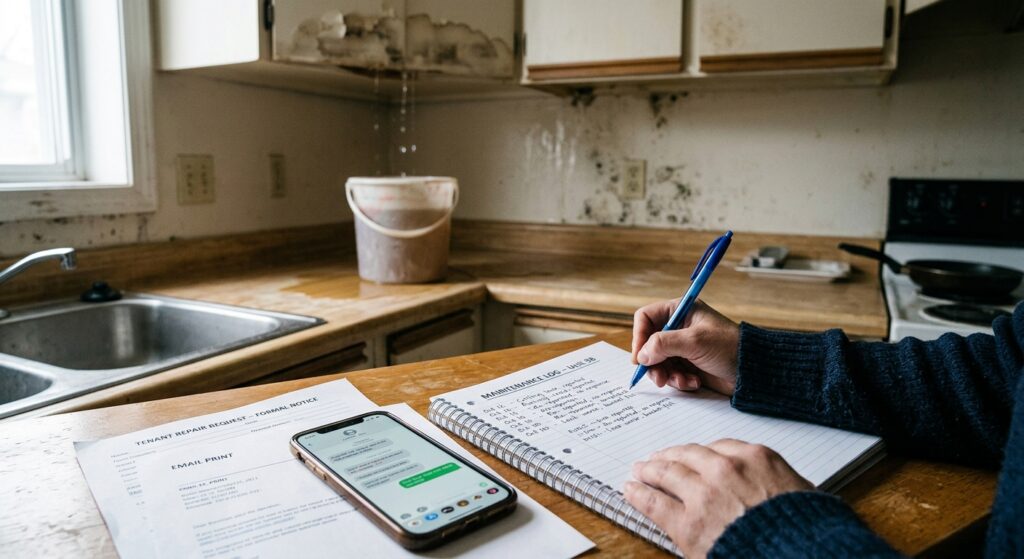
Step 1: Put the Request in Writing (Even If You Already Called)
A landlord’s legal obligation to repair generally begins once they are aware of the problem. A clear, dated, written report matters more than you might think. If you’ve reported the issue only by phone or verbally, follow up in writing today. Even if they’ve promised to deal with it, make a written record.
Include:
- What the problem is and where
- The date you first noticed it and the date of this written report
- Photos or video, ideally with a visible date
- A reasonable deadline for a response (proportionate to the severity, a few days for something urgent, longer for routine issues)
Keep a copy of everything, and use a method that gives you proof of sending, email, or a messaging platform with read receipts.
Step 2: Send a Formal Follow-Up
If there’s no response, or no action, within a reasonable time for the severity of the issue, send a follow-up that’s more formal in tone. Reference your original report by date, restate the problem, and make clear you’re prepared to escalate if it isn’t addressed. This alone often prompts action, since most landlords would rather deal with a repair than deal with a council inspection or a legal claim.
Step 3: Contact Your Council’s Environmental Health Team
If your landlord still isn’t acting, particularly on anything serious, damp, mould, heating failure in cold weather, structural issues, or electrical hazards, you can ask your local council’s environmental health team to inspect the property under the Housing Health and Safety Rating System (HHSRS).
What happens next:
- An environmental health officer inspects the property and rates any hazards as Category 1 (serious, the council must act) or Category 2 (less severe, the council can act at its discretion)
- Where a Category 1 hazard is found, the council has a legal duty to take action, commonly an improvement notice requiring specific repairs within a set timeframe
- This is a free service, and you don’t need a solicitor or claims company to use it
This route works for private tenants and housing association tenants. If your landlord is the council, you can’t use this route against them directly, since a council can’t take enforcement action against itself — a different escalation path applies in that case, and Shelter or Citizens Advice can point you to it.
Step 4: Get Advice on Compensation
If disrepair has genuinely affected you, damaged belongings, a period living without heating, or a health impact, you may be entitled to compensation, typically calculated as a reduction reflecting how much less the property was worth to live in during the period of disrepair. This is usually pursued as a civil claim rather than something a council inspection alone resolves, and it’s worth getting advice from a solicitor or Citizens Advice before going down this route, since evidence requirements are specific and the wrong approach can weaken a genuinely strong case.
What Not to Do
- Don’t withhold rent as a way to force action, unless you’ve had specific legal advice that this is safe in your circumstances. It’s a common instinct, but it can put you at real risk of arrears and possession proceedings, and doesn’t guarantee the repair happens any faster.
- Don’t carry out major repairs yourself and simply deduct the cost, without following the correct legal process for doing so, there’s a specific procedure for this (“repair and deduct”) with strict requirements, and skipping steps can leave you out of pocket with no recourse.
- Don’t assume raising a repair puts your tenancy at risk — retaliatory eviction for reporting genuine repair problems carries its own legal protections, though it’s still worth getting advice if you’re worried about this specific concern.
Building a Strong Evidence Log
Whichever route you end up needing, a clear record makes everything faster:
- Every report, with dates, kept together in one place
- Every landlord response (or non-response) noted
- Dated photos or video showing the problem and how it’s changed over time
- Any costs you’ve incurred because of the delay (a hotel stay during a heating failure, replaced belongings from a leak)
Frequently Asked Questions
How long should I wait before escalating to the council? There’s no fixed number of days that applies to every case, it depends on severity. For something dangerous or making the property genuinely unsafe to live in, escalate quickly. For a routine, non-urgent repair, give your landlord a reasonable window first, but don’t feel you have to wait indefinitely.
Can environmental health force my landlord to act? Yes, where they identify a Category 1 hazard, the council has a legal duty to take action, which can include serving an improvement notice requiring specific repairs within a set timeframe.
Is contacting the council free? Yes. You don’t need to pay a claims management company to report a repair problem or request an HHSRS inspection, your council’s environmental health team handles this as part of their statutory role.
What if my landlord threatens to evict me for reporting repairs? Get advice immediately from Shelter or Citizens Advice. Retaliatory eviction in response to a genuine repair complaint is a recognised issue with its own protections, and a threat like this is worth documenting carefully alongside your repair evidence.
This article covers the law in England as of September 2026. It’s general information, not legal advice for your specific situation. GOV.UK’s tenant guide to the HHSRS explains the council inspection process in full. Last reviewed: September 2026.
What to Read Next
- What Repairs Is a Landlord Legally Responsible For? — the full picture on statutory duties
- Damp, Mould, Heating, and Unsafe Housing: Tenant Rights — for serious health-and-safety hazards specifically
- Your Landlord Is Not Doing Repairs: Full Guide — the complete cluster