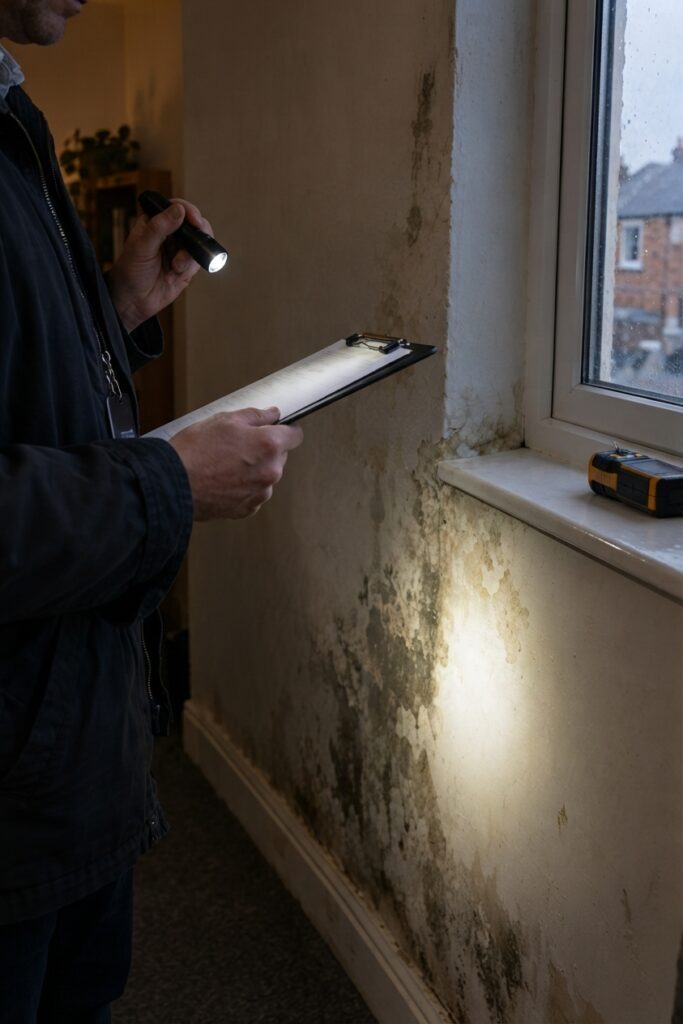
How it Works

Landlord Not Doing Repairs? Your Legal Rights & How to Force Action

A landlord not doing repairs isn’t just frustrating, in England it’s usually a breach of the law. Section 11 of the Landlord and Tenant Act 1985 makes your landlord legally responsible for the structure of your home, its heating, water and sanitation (legislation.gov.uk), and the fitness-for-human-habitation rules add a duty to keep your home free from damp and hazards. The single most important thing you can do right now is put your repair request in writing, a dated record starts the legal clock and is the foundation of everything that follows.

Last reviewed 18 Sept 2026 England only ~15 min read Checked against GOV.UK & Shelter
🚨 Emergency warning: keep paying your rent. You cannot legally withhold rent because your landlord is ignoring repairs — doing so creates arrears, and arrears are grounds for eviction even when the disrepair is entirely your landlord’s fault (Shelter England). There are lawful ways to force repairs and recover compensation — this page shows you every one of them.
❌ Been served an eviction notice since you complained? Evicting a tenant for asking for repairs is retaliatory eviction. Since 1 May 2026, Section 21 “no-fault” notices are abolished, and a court can throw out a possession claim served in retaliation for a repair complaint (Shelter England). Check if your eviction notice is valid →
The Basics

What Repairs Is Your Landlord Legally Responsible For?

Your landlord cannot pass structural maintenance duties onto you, no matter what your tenancy agreement says. For virtually all private tenancies in England, the law implies these duties automatically (Section 11, Landlord and Tenant Act 1985).

Structure & exterior

Roofs, walls, windows, external doors, gutters, drains and external pipes, kept in repair.

Water, gas & electricity

The installations that supply these services, wiring, pipes and fittings, in repair and proper working order.

Sanitation

Basins, sinks, baths, showers and toilets, kept in repair and working order.

Heating & hot water

Boilers, radiators and the installations that heat your home and water.

What your landlord is NOT responsible for

Anything you’re entitled to remove, damage caused by your own lack of “tenant-like” care (day-to-day cleaning, unblocking your own sink), rebuilding after fire or flood, and appliances like washing machines unless the tenancy agreement says otherwise. Read more about whether a landlord has to replace a washing machine in the UK.

The damp and mould rule

Since the Homes (Fitness for Human Habitation) Act 2018 amended the 1985 Act, your home must also be fit for human habitation, and the statutory test explicitly includes freedom from damp and any prescribed HHSRS hazard. “It’s just condensation, open a window” is not a legal defence when the underlying cause is disrepair your landlord must fix: a broken gutter letting water penetrate the wall, or an inadequate heating system. Landlords must also hold a current annual Gas Safety Certificate.

Your landlord (or someone authorised in writing) may enter to inspect the property’s condition on 24 hours’ written notice, they cannot simply turn up unannounced (legislation.gov.uk).

Read our guide on landlords entering without permission →

The Big Question

Awaab's Law: Does It Apply to Private Renters Yet?

This is the question most repair guides get wrong. Here is the exact position as of September 2026. For a fuller explanation, see our guide to whether Awaab’s Law applies to private renters.

Not yet — private renting

Coming via the Renters' Rights Act

  • The RRA 2025 extends Awaab’s Law to private tenancies in its third implementation phase
  • Timescales are still subject to consultation, no confirmed start date (GOV.UK roadmap)
  • Industry estimates point to around 2027
  • Meanwhile: your landlord’s Section 11 and fitness duties are fully enforceable now, and the social deadlines are a strong, citable benchmark of what’s “reasonable”
In force — social housing

Awaab's Law since 27 Oct 2025

  • Emergency hazards: investigate and carry out safety work within 24 hours
  • Significant damp and mould: investigate within 10 working days
  • …then make safe within 5 working days
  • Can’t be made safe in time? Landlord must offer suitable alternative accommodation (GOV.UK)

When it changes, this page changes.

The moment the government confirms the private-sector timescales, quote them in your formal complaint, and we’ll update this page the same week. A fresh, dated update is also a ranking signal.
How Fast Is "Reasonable"?

Emergency vs Non-Emergency Repairs

Emergency
Gas leak, no heating in winter, no running water, failed toilet, severe flooding, dangerous electrics, broken main-door lock
Within 24 hours Reasonable Timescale
Urgent
Persistent leaks, partial heating failure, damp spreading, minor electrical faults
Days, not weeks Reasonable Timescale
Routine
Dripping tap, loose fence panel, minor cosmetic issues
Typically up to 28 days Reasonable Timescale

There is no single statutory clock for private tenancies, "reasonable time" depends on the hazard, the impact on your household (children, elderly, health conditions shorten it), and when your landlord was notified (GOV.UK).

The Action Plan

The 4-Step Plan: How to Force Your Landlord to Do Repairs

1

Send a formal written repair request

Email or letter, dated: describe the problem, where it is, how long it’s been going on, and request a repair date. Ask for written confirmation within 7 days. Keep the tone factual.

Why it matters: the legal clock starts when your landlord is notified, before that, they’re not liable for the delay.

2

Build your evidence file

Dated photos and videos of every defect; a log of each contact (date, method, what was said); receipts for damaged belongings and extra heating costs. If damp: a cheap humidity meter helps. If your health is affected, see your GP so it’s on your medical record.

This file is your compensation claim, built in advance.

3

Report your landlord to the council, request an HHSRS inspection

If the written request is ignored, contact your council’s environmental health team. An officer inspects under the Housing Health and Safety Rating System. A category 1 hazard (includes damp and mould, excess cold, unsafe electrics) means the council must act, and can serve an enforceable Improvement Notice (GOV.UK). If you’re still trying to get a response from your landlord, see what to do if your landlord ignores repair requests.

This is the hinge of the whole plan, see the council timeline below.

4

Formal legal action

A county court disrepair claim under Section 11 can force the repairs and win compensation. A letter before action usually gets movement first, most landlords settle once the paper trail shows a winnable claim.

Members: submit a Situation Review and we’ll assess your evidence before you spend anything.

Council Enforcement

How to Report Your Landlord to the Council (HHSRS)

1

You report in writing first

The council will expect you to have notified your landlord and allowed reasonable time. Your dated written request from Step 1 is exactly what they want to see.

2

Request an HHSRS inspection

Contact the environmental health team. An officer assesses your home against the 29 hazards of the Housing Health and Safety Rating System, damp, excess cold, unsafe electrics and more (GOV.UK).

3

Category 1 hazard found

The council must take enforcement action for category 1 hazards — typically serving an Improvement Notice that compels your landlord to do the works by a set date.

4

Landlord ignores the notice

Non-compliance is a criminal offence. It exposes your landlord to civil penalties — and it's the trigger for a Rent Repayment Order: up to 2 years' rent repaid to you (GOV.UK).

⚠ The RRO trap: ignoring the council's order, not slow repairs, is the offence

Reporting council for landlord not doing repairs
The Question Everyone Asks

Can You Withhold Rent for Repairs?

Short answer: no, don’t do it without formal advice. In England you have no general right to withhold rent because repairs are outstanding. Your duty to pay and your landlord’s duty to repair are separate legal obligations: withholding creates arrears, and rent arrears are grounds for possession even while the property is in disrepair (Shelter England, Citizens Advice). If you are worried that your landlord may try to remove you because of the dispute, see can a landlord evict you without a court order?

What to do instead:

report to the council (Step 3), negotiate a documented rent reduction for the affected period, or claim compensation through a disrepair claim — all of which put money back in your pocket without ever risking your home.
What You Can Recover

Housing Disrepair Claims: How Much Compensation?

If your landlord knew about the disrepair and failed to act, a county court can award three things:

General damages

Compensation for inconvenience, discomfort and health impact, typically assessed as a % of your rent over the disrepair period: roughly 25% for mild, localised issues; up to 50% for widespread disrepair; up to 100% where the home was effectively uninhabitable. Longer and more serious = higher.

Special damages

Your actual financial losses: belongings ruined by leaks or mould, extra electricity from running heaters during a boiler outage, replacement furniture, even moving costs. Keep every receipt. If damaged belongings or property condition later become relevant to your tenancy deposit, see our guide on what to do if your landlord is not returning your deposit.

A repair order + costs

The court can order the landlord to carry out the works, and in successful claims your legal costs are usually recoverable (Shelter England).

Every claim turns on evidence: the dated written report, the photos, the landlord’s responses. Steps 1 and 2 are your claim, built in advance. Members: submit a Situation Review for an assessment of your claim’s strength →

When Rent Comes Back to You

Rent Repayment Orders: When Can You Get Rent Back?

A Rent Repayment Order lets a tribunal order your landlord to repay up to 2 years’ rent, but only where the landlord committed one of the specific offences listed in the legislation (GOV.UK).

For the repairs context, the relevant trigger is: failing to comply with a council Improvement Notice served after an HHSRS inspection found a hazard in your home. Other qualifying offences include harassment and illegal eviction, and licensing failures.

So the realistic sequence is: written request → no action → council inspection → Improvement Notice → landlord still doesn’t comply → that’s when an RRO becomes available. You cannot get rent back simply because repairs were slow, the offence is ignoring the council’s formal order. That’s one more reason Step 3 is the hinge of the plan.

If Complaining Backfires

Served an Eviction Notice After Complaining? Retaliatory Eviction

Your landlord cannot lawfully evict you for asking for repairs. Since 1 May 2026, Section 21 “no-fault” notices no longer exist — a private landlord must rely on a specific Section 8 ground, and there is no ground for “tenant complained about repairs” (Shelter England).

  • Timing is the tell. A notice served days or weeks after a written repair complaint is inherently suspicious to a court — especially where the ground relied on is weak.
  • Your paper trail is your defence. The dated complaint, the landlord’s responses (or silence), and any council notices let the court treat the possession claim as retaliatory — and courts can dismiss retaliatory claims.
  • Harassment is a crime. Threats, cutting services, or forcing you out over a repair complaint can be criminal harassment or illegal eviction under the Protection from Eviction Act 1977 (GOV.UK) — and harassment is itself an RRO-triggering offence.

Check whether your eviction notice is valid →

Common Situations

Situations Renters Face, and What to Do

→Landlord ignoring messages about repairs

You've texted and called repeatedly about a broken boiler or leaking roof; they promise and never act.

Send the formal written request now, it fixes the date from which delay counts against them.

→Landlord says the damage is your fault

They blame your "lifestyle" for the mould and refuse to act.

Reply in writing: describe the defect, request an inspection, the fitness rules make them responsible for damp caused by disrepair, regardless of lifestyle claims.

→No heating or hot water in winter

Children or vulnerable people in the household, and the property is cold.

Treat as an emergency: written request immediately stating the household impact, then the council the same day if there's no same-day response.

→Repair done badly or the problem returns

A contractor "fixed" it; weeks later it's back and your landlord refuses to return.

Write again confirming the repair was inadequate and the defect persists — a second dated complaint strengthens the council report and any claim.

→Damp and mould dismissed as "condensation"

Landlord says open the windows; it's affecting your health.

Written request citing the fitness-for-habitation duty and the underlying cause (gutter, damp-proof course, inadequate heating). Get health effects on your GP record; request an HHSRS inspection.

→Threatened with eviction since you complained

A notice or hints that your tenancy won't survive the complaint.

Don't move out on a notice alone, only a court order can evict. Document the timeline: weak grounds served right after a complaint point to retaliation, which courts can dismiss.

How We Help

Force the Repairs, Without Paying Solicitor Fees

Renters Rights Act Services gives you the repair notices, evidence templates and case support to force action against a landlord not doing repairs, built around the same escalation path this page walks you through.

✓ Situation Review — your evidence assessed
✓ Formal Repair Request Letter
✓ Repair Request Log & Timeline Tracker
✓ Call Support — talk through your situation
Join today — get instant access

£4.99 /month Cancel anytime · Member pricing shown for illustration

Quick Answers

Frequently Asked Questions

How long does my landlord have to fix a repair?
For private tenancies there's no fixed statutory clock, the law says repairs must happen within a "reasonable time", judged by the hazard's seriousness, your household's vulnerability, and when your landlord was formally notified. Emergencies are measured in hours; routine repairs in weeks (around 28 days is a common benchmark). The social-sector Awaab's Law deadlines are a strong benchmark of what courts consider reasonable.
What counts as an emergency repair?
Hazards posing an immediate risk: gas leaks, electrical dangers, no heating in winter, no running water, a failed toilet with no alternative, severe flooding, and a broken lock leaving the home insecure. Report in writing and call the council the same day if nothing happens.
Can I be evicted for complaining about repairs?
Not lawfully. Section 21 is abolished, there is no Section 8 ground for complaining, and a court can dismiss a retaliatory possession claim. Harassment or forcing you out is a criminal offence. Keep a written timeline of complaint vs notice.
Can I withhold rent if repairs are not done?
No, you have no general right to withhold rent for disrepair in England. Withholding creates arrears and exposes you to a possession claim even while your landlord is at fault. Use the lawful routes: council enforcement, a documented rent reduction, or a compensation claim.
What is a Rent Repayment Order?
A tribunal order requiring a landlord to repay up to 2 years' rent after committing a listed housing offence. The disrepair-relevant trigger is failing to comply with a council Improvement Notice. It also covers harassment, illegal eviction and licensing offences.
What if my landlord says the damage is my fault?
Don't accept blame verbally. Reply in writing describing the defect and requesting an inspection. Your landlord is responsible for damp caused by disrepair regardless of "lifestyle" claims. A council HHSRS inspection gives an independent, expert view of the cause.
What is the Housing Health and Safety Rating System (HHSRS)?
The risk-based assessment councils use to inspect homes — it scores 29 hazards, from damp and mould to excess cold and unsafe electrics. Category 1 hazards require the council to take enforcement action, such as an Improvement Notice. Any private tenant can request a free inspection from their council's environmental health team.
What is the council's role in repair disputes?
Councils enforce housing standards. An environmental health officer can inspect your home under HHSRS and, if serious hazards exist, compel your landlord to act. The council's involvement also unlocks stronger remedies: ignoring the notice is an offence that can lead to civil penalties and a Rent Repayment Order.
Do I need a solicitor to report a repair issue?
No. The escalation path — written request, evidence, council inspection, needs no solicitor, and most disputes resolve at or before the council stage. Legal help becomes useful only for a county court disrepair claim, where costs are usually recoverable if you win.
Does Awaab's Law apply to private renters?
Not yet. It has applied to social housing in England since 27 October 2025 (24 hours for emergencies; 10 working days to investigate significant damp and mould, 5 working days to make it safe). The Renters' Rights Act 2025 extends it to private tenancies in its third phase, timescales still subject to consultation. Private renters can cite the social deadlines as a benchmark of what's reasonable.
Where This Comes From

Legal Sources

Section 11, Landlord and Tenant Act 1985 — statutory repairing obligations (legislation.gov.uk)
Landlord and Tenant Act 1985 — fitness for human habitation, s9A/s10, freedom from damp (legislation.gov.uk)
Implementing the Renters’ Rights Act 2025: roadmap — GOV.UK (Awaab’s Law PRS = Phase 3, subject to consultation)
Withholding rent for repairs — Shelter England
How We Help

Support for Tenants Whose Landlord Won't Do Repairs

Renters Rights Act Services gives you the repair notices, evidence templates and case support to force action against a landlord not doing repairs, without paying solicitor fees. If your landlord has been turning up unannounced to inspect, see our guidance on [landlords entering without permission].

🔧

Formal Repair Request Letter

Written repair notice citing Awaab’s Law timescales. Creates legal paper trail.
Members Only
Repair
📅

Repair Request Log & Timeline Tracker

Log every repair request with dates, responses, and Awaab’s Law deadline tracking.
Members Only
Repair
🔍

Situation Review

Submit your details and documents. We map your issue, flag key dates, and outline your options.
Members Only
Review
📞

Call Support

Not sure where to start? We’ll listen to your situation and point you in the right direction.
Members Only
Support

Free Guides

Latest Articles & Guides

We are not a law firm. Renters Rights Act Services provide information and guidance based on current UK housing legislation.

Damp, Mould, Heating, and Unsafe Housing: Tenant Rights

Damp, Mould, Heating, and Unsafe Housing: Tenant Rights

Persistent damp, black mould, a heating system that won’t hold temperature, or conditions…

What to Do If Your Landlord Ignores Repair Requests

What to Do If Your Landlord Ignores Repair…

If you’ve reported a repair and your landlord doesn’t respond, you won’t have…
Does a Landlord Have to Replace a Washing Machine in the UK

Does a Landlord Have to Replace a Washing…

Generally, no. Unless your tenancy agreement specifically says otherwise, a landlord in England…
What Repairs Is a Landlord Legally Responsible For?

What Repairs Is a Landlord Legally Responsible For?

Your landlord is legally responsible for the structure and exterior of your home,…
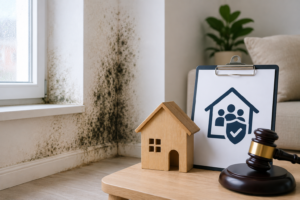
Does Awaab’s Law Apply to Private Renters?

Does Awaab’s Law Apply to Private Renters?

Short answer: not yet, but it’s coming, and here’s exactly what’s confirmed law…

Your landlord has legal obligations.
Make sure they meet them.

Join today and get instant access to the Formal Repair Request Letter, Repair Log, and Situation Review service.

Scroll to Top