In England, a landlord must return a protected tenancy deposit within 10 days of the landlord and tenant agreeing how much of the deposit should be returned. The 10 days does not automatically start on the day you move out. If you and your landlord disagree about deductions, the deposit can remain protected while the dispute is resolved.
Does a landlord have 10 days to return the deposit after you move out?
Not necessarily.
The commonly quoted “10-day deposit rule” is often misunderstood.
The legal requirement is that the deposit must be returned within 10 days after the landlord and tenant have agreed how much should be returned.
That means there are two different situations.
If you agree on the full deposit
If you and your landlord agree that the entire deposit should be returned, the agreed amount should be returned within 10 days.
If you agree on deductions
If you agree that the landlord can deduct a particular amount for a legitimate loss, the remaining balance should be returned within 10 days of that agreement.
If you disagree about deductions
The situation is different if the landlord wants to keep part of your deposit and you do not agree.
You can challenge the proposed deductions. If the deposit is protected, it remains protected under the tenancy deposit protection scheme while the dispute is resolved.
So a landlord cannot simply say:
“It has been 10 days since you moved out, so I can keep the deposit.”
The important date is generally the agreement about how much should be returned, not simply the date the tenancy ended.
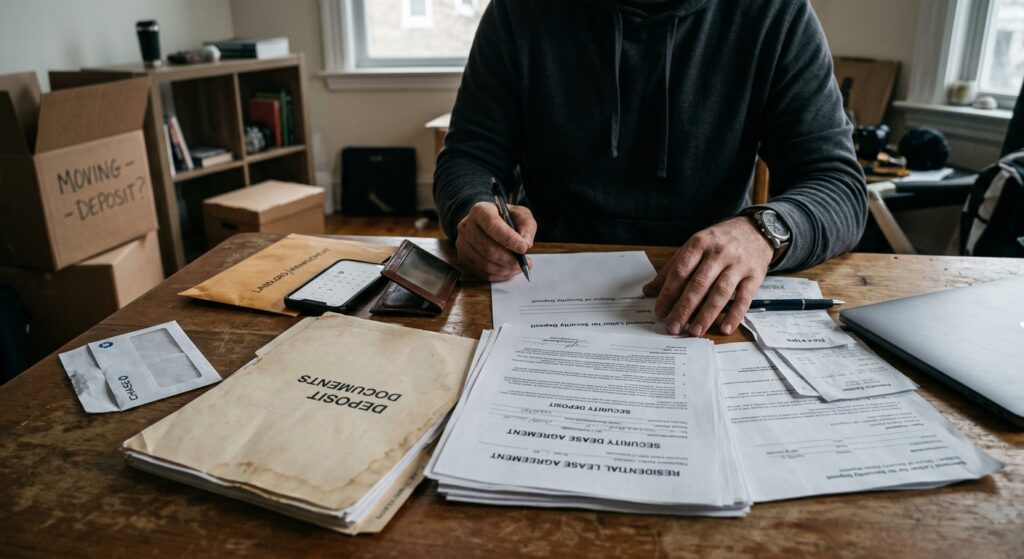
What is the 10-day deposit rule?
The 10-day rule applies to deposits protected under a government-approved tenancy deposit protection scheme.
GOV.UK currently states that a landlord must return the deposit within 10 days of the landlord and tenant agreeing how much the tenant will receive back.
The approved schemes in England include:
Your landlord or letting agent should have given you information about which scheme protects your deposit and how to get it back.
When does the 10-day period actually start?
The 10-day period starts once you and your landlord have agreed how the deposit should be divided.
For example:
Scenario 1 — Full deposit returned
Your tenancy ends on 1 September.
You and your landlord agree on 5 September that the full £1,200 deposit should be returned.
The 10-day period runs from the agreement on 5 September.
Scenario 2 — Agreed deduction
Your deposit is £1,200.
You agree that £150 can be deducted for an amount you accept is properly owed.
The remaining £1,050 should then be returned within 10 days of the agreement.
Scenario 3 — Disputed deduction
Your landlord says they want to keep £500 for cleaning and repairs.
You disagree and challenge the deduction.
There is no agreed amount for that £500, so the dispute may need to be resolved through the deposit protection scheme’s dispute process or, where appropriate, the courts.
The deposit remains protected while the dispute is being resolved.
What if my landlord wants to make deductions?
A landlord can make deductions from a tenancy deposit where there is a legitimate basis for doing so.
For example, a deduction could relate to:
- unpaid rent
- damage caused by the tenant
- certain unpaid bills
- cleaning where the property was left in a worse condition than required by the tenancy
But the landlord should have a proper basis for the amount claimed.
A deposit is not automatically forfeited because the tenancy has ended.
If you disagree with a proposed deduction, ask the landlord or agent to explain:
- What the deduction is for.
- How much they want to deduct.
- Why they believe you are responsible.
- What evidence supports the amount claimed.
You should keep copies of photographs, inventories, check-out reports, receipts and correspondence that support your position.
Read next: [Can a Landlord Legally Keep Your Deposit?]
What happens if I disagree with my landlord?
If your deposit is protected, you may be able to use the tenancy deposit scheme’s free dispute resolution service.
The schemes can consider evidence from both sides and decide how the disputed deposit should be divided. GOV.UK confirms that deposit protection schemes provide dispute resolution where landlord and tenant cannot agree about the amount to be returned.
This can be useful where the landlord claims deductions that you believe are excessive or unjustified.
Examples of deductions you might challenge
You could potentially dispute claims involving:
- cleaning that amounts to ordinary wear and tear
- replacing items that were already old
- charging the full replacement cost for partially worn items
- damage that existed before your tenancy
- repairs that were actually the landlord’s responsibility
- charges that are not supported by evidence
- deductions that are disproportionate to the landlord’s actual loss
The exact circumstances and evidence matter.
Can a landlord keep my deposit while there is a dispute?
If your deposit is protected, the deposit remains protected in the scheme while the dispute is being resolved.
This is why you should not assume that the money has been permanently lost simply because your landlord says they are keeping it.
The dispute may be resolved by:
- agreement between you and your landlord;
- the deposit scheme’s dispute resolution service; or
- court proceedings where appropriate.
If you and the landlord eventually agree how the deposit should be divided, the relevant amounts can then be released.
What if my landlord has not returned the deposit after 10 days?
First, establish what the 10 days relates to.
If you and your landlord have already agreed the amount that should be returned and the landlord has still not paid it after the 10-day period, you should act rather than simply continue waiting.
Step 1: Check your deposit protection scheme
Find out which scheme protects your deposit.
Your landlord should have given you the scheme’s details and information about how to recover the deposit.
Step 2: Make a written request
Write to the landlord or agent and state:
- when the tenancy ended;
- how much the deposit was;
- how much you agreed should be returned;
- when you reached that agreement; and
- that the agreed amount has not been paid.
Keep a copy of the message.
Step 3: Contact the deposit scheme
If the landlord does not respond or the money is still being withheld, contact the relevant deposit protection scheme.
The procedure can depend on whether your deposit is held in a custodial scheme or covered by an insurance-based scheme.
Shelter explains that the schemes have procedures for dealing with landlords who do not respond or refund the deposit.
Step 4: Challenge disputed deductions
If the problem is not simply delay but disagreement over deductions, use the scheme’s dispute resolution process where available.
The service is designed to consider evidence from both sides and determine how the disputed deposit should be divided.
What if my landlord does not respond?
Do not assume that you have to wait indefinitely.
If your landlord ignores your request for the deposit, contact the protection scheme and explain what has happened.
The exact procedure depends on the scheme and how the deposit was protected.
For example, custodial schemes hold the deposit themselves and have procedures for requesting repayment. Insurance-based schemes work differently because the landlord or agent normally holds the money.
Follow the instructions given by the specific scheme protecting your deposit.
What if the landlord never protected my deposit?
This is a separate issue from an ordinary delayed deposit refund.
Where a landlord was required to protect the deposit but failed to do so, you may have additional legal remedies.
GOV.UK states that a tenant can apply to the county court where a landlord should have used a tenancy deposit protection scheme but did not. The court can order repayment of the deposit and may award compensation of up to three times the original deposit in qualifying circumstances.
Do not treat an unprotected deposit as simply a normal “10-day delay” problem.
There are different rules and potential remedies.
Read next: [What Happens If Your Landlord Did Not Protect Your Deposit?]
Does the 10-day rule apply to every type of deposit?
No.
The tenancy deposit protection rules apply to qualifying tenancy deposits that are required to be protected.
A holding deposit is different from a tenancy deposit. GOV.UK explains that a holding deposit does not have to be protected in a tenancy deposit protection scheme. Once you become a tenant, however, the holding deposit may become part of the tenancy deposit.
There are also different rules for different types of tenancy and different parts of the UK.
This article covers England.
Scotland and Northern Ireland have separate tenancy deposit protection systems, while Wales has its own rules and scheme arrangements.
Can I ask for my deposit back before the 10 days?
Yes.
You do not need to wait until the 10-day period is nearly over before asking for your deposit.
In practice, you should communicate with your landlord or agent promptly after the tenancy ends.
Shelter recommends asking for the deposit back where it has not been returned and checking with the relevant deposit protection scheme if there is a problem.
The important point is that the legal 10-day period concerns payment after agreement about the amount to be returned.
A simple deposit-return timeline
| Stage | What happens |
|---|---|
| 1. Tenancy ends | The landlord and tenant establish the condition of the property and any amounts potentially owed. |
| 2. Proposed deductions | The landlord may claim money for legitimate losses such as unpaid rent or damage. |
| 3. Agreement | Both sides agree how much of the deposit should be returned. |
| 4. 10-day period | The agreed deposit amount must be returned within 10 days. |
| 5. Disagreement | If deductions are disputed, the deposit can remain protected while the dispute is resolved. |
| 6. Dispute resolution | Where available, the deposit scheme’s free dispute service can consider the evidence. |
| 7. Court | Court action may be appropriate where the dispute cannot otherwise be resolved or where other legal remedies are involved. |
What evidence should you keep?
If there is any disagreement about your deposit, evidence can become extremely important.
Keep:
- your tenancy agreement;
- deposit protection certificate or information;
- check-in inventory;
- check-out report;
- photographs and videos;
- emails and messages;
- evidence of rent payments;
- receipts for cleaning or repairs;
- records of maintenance issues;
- correspondence about deductions; and
- proof of the date you moved out.
The stronger your evidence, the easier it is to explain why a deduction should or should not be made.
Deposit scheme disputes are decided using evidence submitted by the parties.
What should you do if the deposit deadline has passed?
If you and your landlord agreed the amount to be returned and the money has not been paid within 10 days, take action.
Your next steps should be:
- Check your deposit protection scheme.
- Confirm the amount you agreed should be returned.
- Send a written request to the landlord or agent.
- Keep evidence of the request.
- Contact the deposit scheme if the landlord does not respond.
- Use the scheme’s dispute resolution process if there is a disagreement.
- Consider further legal action if the dispute cannot be resolved.
Do not confuse a disputed deduction with a simple failure to make an agreed repayment. The appropriate next step can be different.
Frequently asked questions
How long does a landlord have to return a deposit in England?
A landlord must return the deposit within 10 days of the landlord and tenant agreeing how much should be returned. The 10-day period does not automatically begin on the date the tenancy ends.
Does the landlord have 10 days after I move out to return my deposit?
Not necessarily. The 10-day rule applies after the landlord and tenant have agreed how much of the deposit should be returned. If deductions are disputed, the deposit can remain protected while the dispute is resolved.
What if my landlord is refusing to return my deposit?
Check which tenancy deposit protection scheme holds or protects your deposit. If you cannot agree with the landlord about deductions, you may be able to use the scheme’s free dispute resolution service.
What if my landlord did not protect my deposit?
If your landlord was required to protect your deposit but failed to do so, you may be able to apply to the county court. Depending on the circumstances, the court can order repayment and may award compensation of up to three times the original deposit.
Can I dispute a deposit deduction after receiving part of my deposit?
Yes. Receiving part of your deposit does not necessarily mean that you have accepted the remaining deduction. If you disagree with the amount retained, you can challenge it through the relevant deposit protection scheme where its dispute resolution service is available.
What to Read Next
What to Do If Your Landlord Will Not Return Your Deposit
Read the main guide for practical steps when your landlord is withholding your rental deposit.
Can a Landlord Legally Keep Your Deposit?
Understand when deductions for damage, cleaning, rent arrears and other losses may be legitimate.
How to Challenge Unfair Deposit Deductions
Find out how to dispute deductions you believe are excessive, unsupported or unfair.
What Happens If Your Landlord Did Not Protect Your Deposit?
Understand the additional remedies that may apply when your landlord failed to protect your deposit.
This information provides general guidance and is not a substitute for advice about your individual circumstances. The outcome of a deposit dispute can depend on your tenancy agreement, the condition of the property, the evidence available and how the deposit was protected.
Last reviewed: September 2026